Got a USPS text about a failed delivery or a redelivery fee? It is probably a scam. See what real USPS texts look like and how to report it to spam@uspis.gov.
Quick answer: A text that claims to be from USPS, says your package can't be delivered and asks you to tap a link to update your address or pay a small redelivery fee is a scam. The U.S. Postal Inspection Service (USPIS) says USPS won't text you unless you first asked for tracking updates with a tracking number, and that those messages will not contain a link. Don't tap anything. Report the text by emailing a copy and a screenshot to spam@uspis.gov, forward it to 7726, then delete it.
This guide is about the USPS version of the scam: what real USPS texts look like, how to check a delivery yourself, exactly what to send to the Postal Inspection Service and what to do if you already paid. For how fake delivery pages work in general, see our guide to fake parcel-delivery SMS scams. For checking any link in a text, see phishing links and texts.
What a USPS scam text usually says
Fake USPS texts are the most reported text scam in the United States. In its Data Spotlight on the top text scams of 2024, the Federal Trade Commission ranked fake package delivery problems first. It said the messages usually pretend to come from the U.S. Postal Service and link to a website that looks like the real USPS site. The same report put total reported losses to all text scams in 2024 at $470 million.
The wording changes from week to week, but the pattern stays the same:
- A delivery problem. The package "could not be delivered" because of an incomplete address, unpaid postage or a missed delivery attempt.
- A short deadline. Update your details within 12 or 24 hours, or the package will be returned to the sender.
- A small fee. A redelivery or address-correction charge of a dollar or two. The FTC says many people who paid such a fee found it was a trick to get their credit card number or even their Social Security number.
- A link that isn't usps.com. The domain mixes words like usps, post, track or redeliver with a cheap domain ending, or hides behind a link shortener.
- An unfamiliar sender. A random phone number or an email address instead of the USPS short code you registered with.
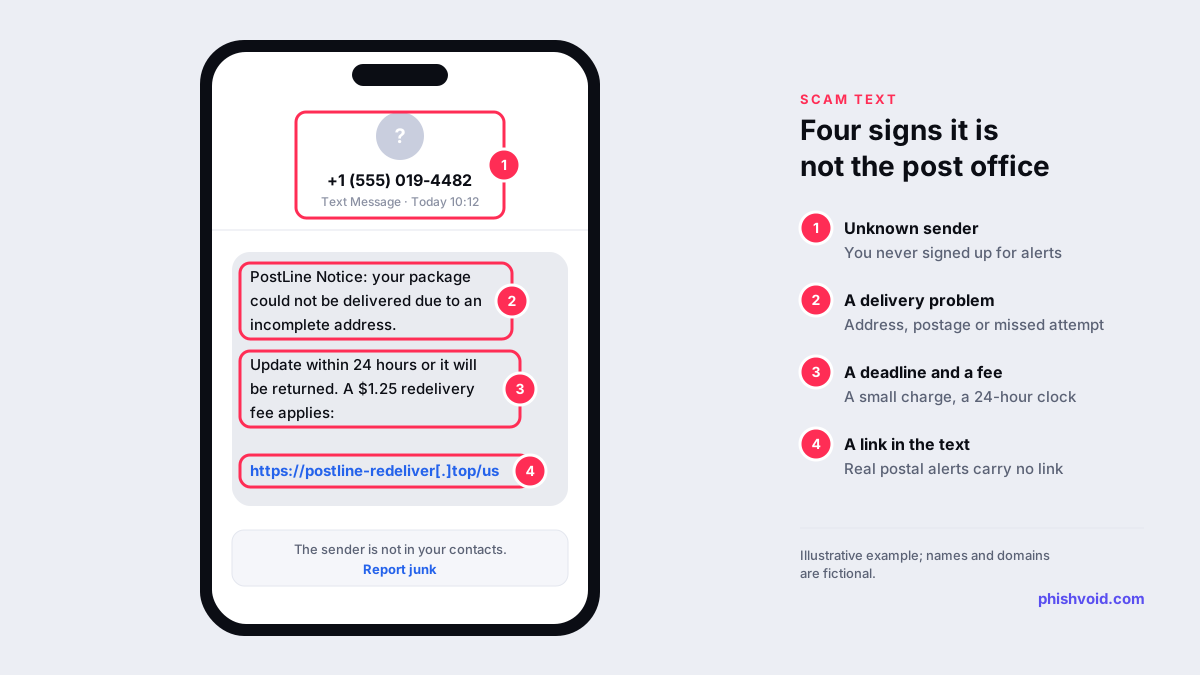
What real USPS text messages look like
USPS does send text messages, so the question isn't whether a text arrived but whether you asked for it. USPS Text Tracking is opt-in. According to the USPS Text Tracking page, you sign up either by texting a tracking number to 28777 (2USPS) or by requesting text updates for that tracking number on USPS Tracking, and a website request also asks you to reply YES to a welcome message.
The Postal Inspection Service is direct about the rest on its smishing page: USPS won't send texts or emails without a customer first requesting the service with a tracking number, those messages won't contain a link, and USPS doesn't charge for these services. That gives you three quick tests:
- Did you request tracking for this exact package? If not, USPS has no reason to text you about it.
- Does the text contain a link? Under the USPIS guidance, a link in a "USPS" text is itself a red flag.
- Does it ask for money or personal details? Tracking updates are free, so a text that wants a fee before your package can be delivered should be treated as a scam.
How to check a USPS delivery without the link
- Leave the message alone. Don't tap the link, call any number in it or reply to it.
- Type the address yourself. Open usps.com in your browser, or the official USPS app, and enter the tracking number from your order confirmation, not a number from the text.
- Ask the sender. If you're expecting something, check the shipping status with the retailer or the account you ordered from. The FTC recommends exactly this in its alert about USPS texts.
- Check the domain before you type anything. Scam sites can also turn up in search results, so make sure the address bar really shows usps.com. If you want to look at a suspicious link safely, our link checker breaks it down without opening it.
If the package exists and has a real problem, USPS Tracking will show it. If the tracking page shows nothing wrong, or the tracking number in the text doesn't exist, the text was a scam.
How to report a USPS text scam to spam@uspis.gov
Reporting takes a couple of minutes and helps investigators connect sending numbers to the sites behind them. The Postal Inspection Service asks you to send reports in this format:
- Copy the body of the message without tapping the link, and paste it into a new email to
spam@uspis.gov. - Add your name to the email.
- Attach a screenshot that shows the sender's phone number and the date the message was sent.
- Add what happened: whether you clicked the link, lost money, shared personal information or noticed an impact on your credit.
USPIS says it will contact you if it needs more information. After that:
- Forward the text to 7726 (SPAM), which USPIS says helps report the scam phone number, or use your phone's report junk option. Then delete it.
- If you lost money or shared details, also file a report at ReportFraud.ftc.gov and with the FBI's Internet Crime Complaint Center. USPIS also takes reports at uspis.gov/report or by phone on 1-877-876-2455.
If the text pretends to be a different carrier, skip spam@uspis.gov and use 7726 and the FTC. Our guide on how to report a scam lists the channels for other countries.
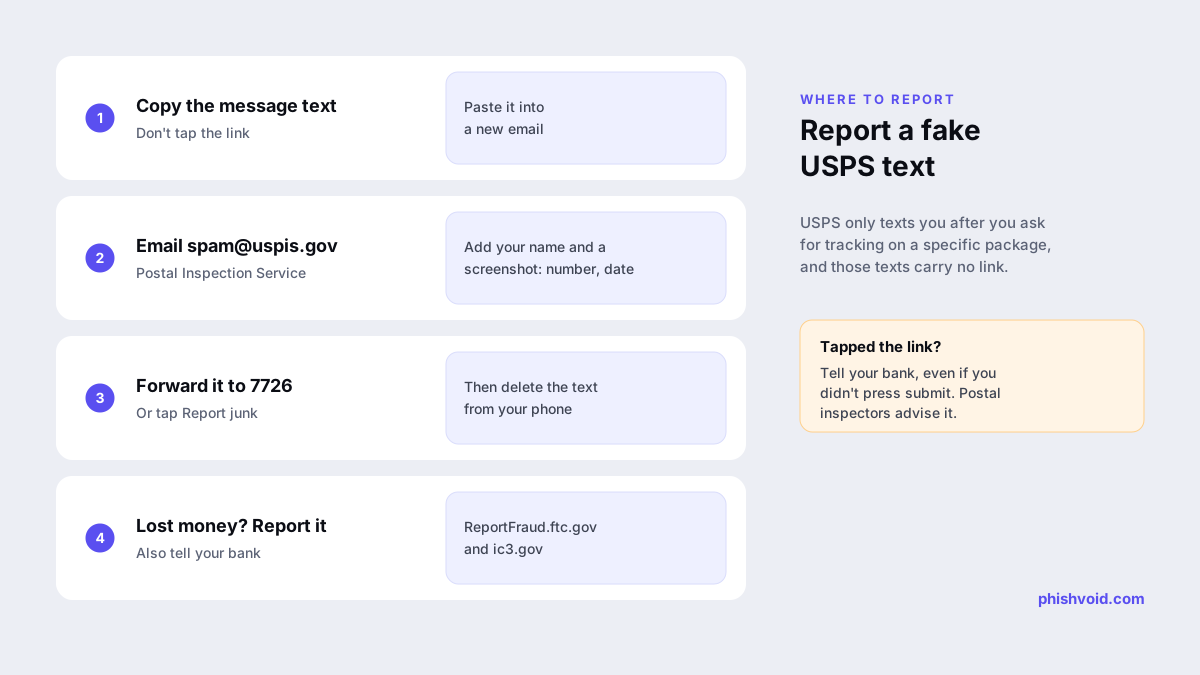
If you tapped the link, paid or entered details
The Postal Inspection Service says that if you interacted with the link at all, even if you didn't press submit, you should notify your financial institution. Act quickly:
- Call your bank or card issuer on the number printed on your card. Ask them to block the card and dispute the payment. The FTC's guide What To Do if You Were Scammed explains the options for each payment method.
- If you entered your Social Security number or other ID details, get a personal recovery plan at IdentityTheft.gov.
- If you typed a password, change it wherever you use it and turn on two-step verification.
- Expect follow-up contact. Scammers who have your phone number and card details may call pretending to be your bank's fraud team. Hang up and call the bank yourself.
Our I got phished page has a fuller checklist for the hours after a scam.
For online stores that ship with USPS
A fake USPS text often arrives while a customer is waiting for a real order, so they may contact your store first to ask whether something went wrong. A few simple steps help. Say in your order and shipping emails which tracking link you send, and that you never ask for a redelivery fee by text. Give support staff the USPIS reporting format above so they can pass it on. And if the scam pages start using your store's name next to the carrier's, treat them as brand impersonation and report the domains to the registrar, the hosting provider and browser blocklists. Phishvoid finds and takes down lookalike delivery and payment pages like these for brands, with a person verifying each site before it is reported.
FAQ
Does USPS send text messages?
Only if you asked for them. USPS Text Tracking sends updates for a tracking number you registered by texting 28777 or by signing up on USPS Tracking. USPIS says these texts won't contain a link.
What is spam@uspis.gov?
It is the U.S. Postal Inspection Service's address for reporting texts that impersonate USPS. Paste the message text, add your name and attach a screenshot that shows the sender's number and the date.
I tapped the link but didn't enter anything. What should I do?
Close the page and don't go back to it. USPIS advises telling your financial institution if you interacted with the link, even without submitting anything. Then report the text and delete it.
Does USPS charge a redelivery fee by text?
USPS says it doesn't charge for its text and email tracking services, and its real texts don't contain links. A text asking for a fee before your package can be delivered should be treated as a scam.
Should I reply STOP to a fake USPS text?
No. Replying tells the sender your number is active. Report it to spam@uspis.gov and 7726, then delete it.
Is someone impersonating your brand?
We find lookalike domains and cloned pages and take them down. Start with a free exposure scan.